
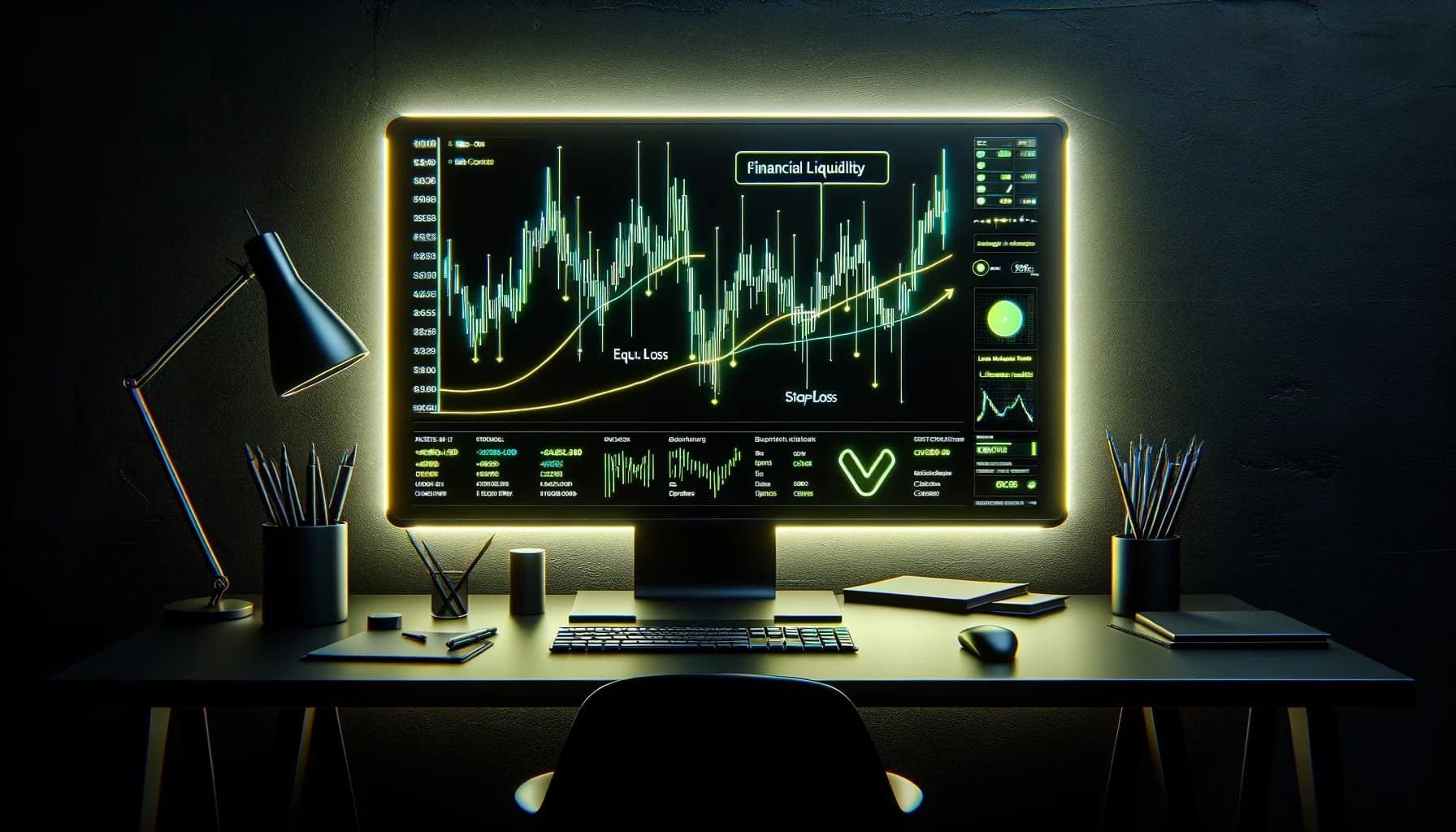


Advanced Trading Concepts — Think Like an Institution
Most retail traders never graduate beyond moving averages and RSI. They're stuck trading like individuals while institutions play a completely different game. If you've been trading for a while and want to understand how markets really move—beyond the surface patterns everyone else sees—you're in the right place.
These aren't concepts you learn on day one. They require understanding basic price action, having some live trading experience, and being comfortable with the idea that everything you thought you knew about markets might be incomplete.
When You're Ready for Advanced Concepts
You don't stumble into advanced concepts by accident. You arrive here because something's been nagging at you about your trading. Maybe you've noticed your stops getting hunted with suspicious precision. Or you've watched price action that seemed to "know" exactly where retail traders were positioned.
The concepts covered here—liquidity, order flow, and the Wyckoff Method—aren't just academic theory. They're practical frameworks for understanding why markets move the way they do. But they demand a shift in perspective from "what will price do next?" to "who's positioned where, and how might they get squeezed?"
🎯 Pro Tip: If you're still struggling with basic support and resistance or haven't developed consistency with simpler strategies, bookmark this page and come back later. These concepts build on fundamentals—they don't replace them.
⚠️ Watch Out: Advanced concepts can create analysis paralysis. Just because you understand liquidity doesn't mean you need to analyze every liquidity pool on every timeframe before placing a trade.
The 3 Advanced Concepts
Liquidity is about understanding where orders sit and how institutions need to fill large positions without moving price against themselves. It explains why your stops get hit right before price reverses, and why certain levels act like magnets.
Order flow takes you inside the mechanics of how trades actually execute. While most traders only see the final price on a chart, order flow reveals the underlying buying and selling pressure that creates those price movements.
The Wyckoff Method provides the original framework for understanding accumulation, distribution, and how "smart money" operates. Written in the 1930s, it's surprisingly relevant to modern algorithmic trading and forms the foundation for concepts like Smart Money Concepts (SMC).
Each concept connects to the others. Wyckoff explains the "why" behind institutional behavior, liquidity shows you "where" they need to act, and order flow reveals "how" they're actually doing it.
Liquidity — The Force That Moves All Markets
Every significant market move starts with a liquidity grab. Before institutions can push price higher, they need shares or contracts to buy. Before they can drive price lower, they need buyers to sell to. This creates predictable patterns around areas where retail traders typically place orders.
Liquidity in Trading — Why Markets Hunt Your Stops breaks down how liquidity pools form and get swept. You'll learn why price often reverses after taking out obvious highs or lows, and how to position yourself on the right side of these moves instead of being the victim.
The concept extends beyond just stop hunting. Institutional order flow requires liquidity for execution. When a fund needs to buy 50,000 shares, they can't just hit the market all at once without driving price up against themselves. Understanding this need helps explain seeming "fake-outs" and why price sometimes needs to go down before it can go up.
🎯 Pro Tip: Start by identifying obvious liquidity pools on higher timeframes before looking at intraday levels. Weekly and daily highs/lows often hold more significant liquidity than 1-hour levels.
Order Flow Basics — Reading Between the Price Lines
Order flow is what happens beneath the surface of every price movement. While your chart shows a nice clean candle moving from $100 to $101, order flow reveals whether that move happened on aggressive buying, passive absorption, or algorithmic layering.
Order Flow Basics — Understanding Market Microstructure introduces concepts like bid-ask spread dynamics, volume at price, and market depth. These aren't day-trading scalping techniques—they're ways to confirm or question what price action is telling you on any timeframe.
Understanding order flow helps explain why some breakouts fail immediately while others sustain momentum. It's the difference between a breakout driven by genuine institutional accumulation versus one that's just retail FOMO hitting obvious resistance.
The key insight is that price is just the final result of an auction process. By understanding how that auction works—who's bidding, who's offering, and at what volumes—you can often anticipate price movement before it shows up on traditional indicators.
The Wyckoff Connection to Modern SMC
Richard Wyckoff figured out institutional behavior decades before computers, algorithms, or retail online trading existed. His framework of accumulation, distribution, and the "Composite Man" remains remarkably relevant because the underlying psychology of large-scale market manipulation hasn't changed.
Wyckoff Method — The Original Smart Money Framework covers his complete methodology, including the four phases of accumulation and distribution. But the real value is understanding how Wyckoff concepts translate to modern market structure.
What Wyckoff called "springs" and "upthrusts" are essentially what SMC traders now call liquidity grabs. His "Composite Man" behaves exactly like modern algorithms designed to extract maximum profit from retail positioning. The language has changed, but the game remains the same.
Many traders discover Wyckoff after learning SMC and realize they've been using his concepts without knowing it. Others prefer to learn Wyckoff first for the complete theoretical framework, then apply modern execution techniques.
⚠️ Watch Out: Wyckoff analysis can become overly complex. The core insight—that large players need to accumulate before markup and distribute before markdown—is more valuable than trying to label every minor phase and sub-phase.
FAQ
Should I learn Wyckoff before or after SMC?
Ideally before. SMC is essentially modern Wyckoff — accumulation/distribution, spring/upthrust, composite man. Understanding Wyckoff first gives you the 'why' behind every SMC concept. But many traders learn SMC first and come to Wyckoff later for the deeper framework.
How long does it take to understand liquidity concepts?
The basic idea clicks quickly—institutions need liquidity, so they target retail stops. Actually implementing it consistently takes months of chart study and live trading. Start by identifying obvious liquidity pools and observing how price reacts around them.
Can these concepts work for day trading or just swing trading?
All three concepts work across timeframes. Liquidity exists on 5-minute charts just like daily charts. Order flow is actually more visible on shorter timeframes. Wyckoff accumulation can happen over hours or months. The key is matching your analysis timeframe to your trading timeframe.
Ready to think like an institution? Start with Liquidity in Trading — Why Markets Hunt Your Stops to understand where the real money flows, or dive into Wyckoff Method — The Original Smart Money Framework for the complete theoretical foundation. Both will change how you see every price movement on your charts.