indicator.trading
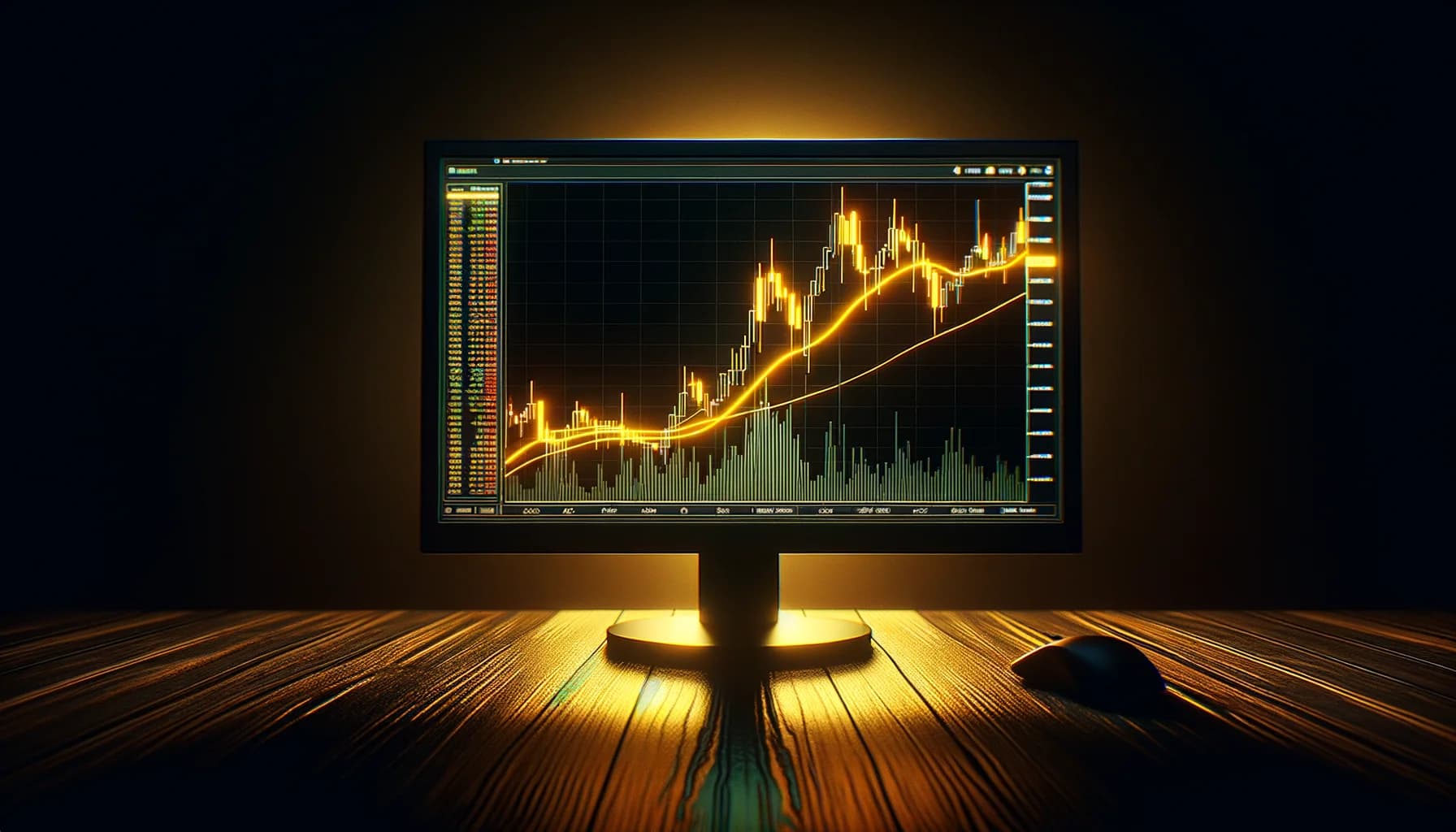
SMA line glowing on candlestick chart in dark trading setup

Simple Moving Average (SMA) — How It Works & How to Use It

beginnerTrend Indicators10 min read

The Simple Moving Average (SMA) is probably the first technical indicator you'll encounter, and it's still one of the most powerful. Don't let the word "simple" fool you — this tool forms the backbone of institutional trading decisions and algorithmic systems worldwide.

Think of the SMA as a smoothing filter for noisy price data. Just like noise-canceling headphones block out distractions so you can hear the music clearly, the SMA filters out market noise to reveal the underlying trend.

While newer indicators promise faster signals and magical accuracy, the SMA endures because it works. It's reliable, widely followed, and creates self-fulfilling prophecies as millions of traders make decisions based on the same levels.
What is the SMA

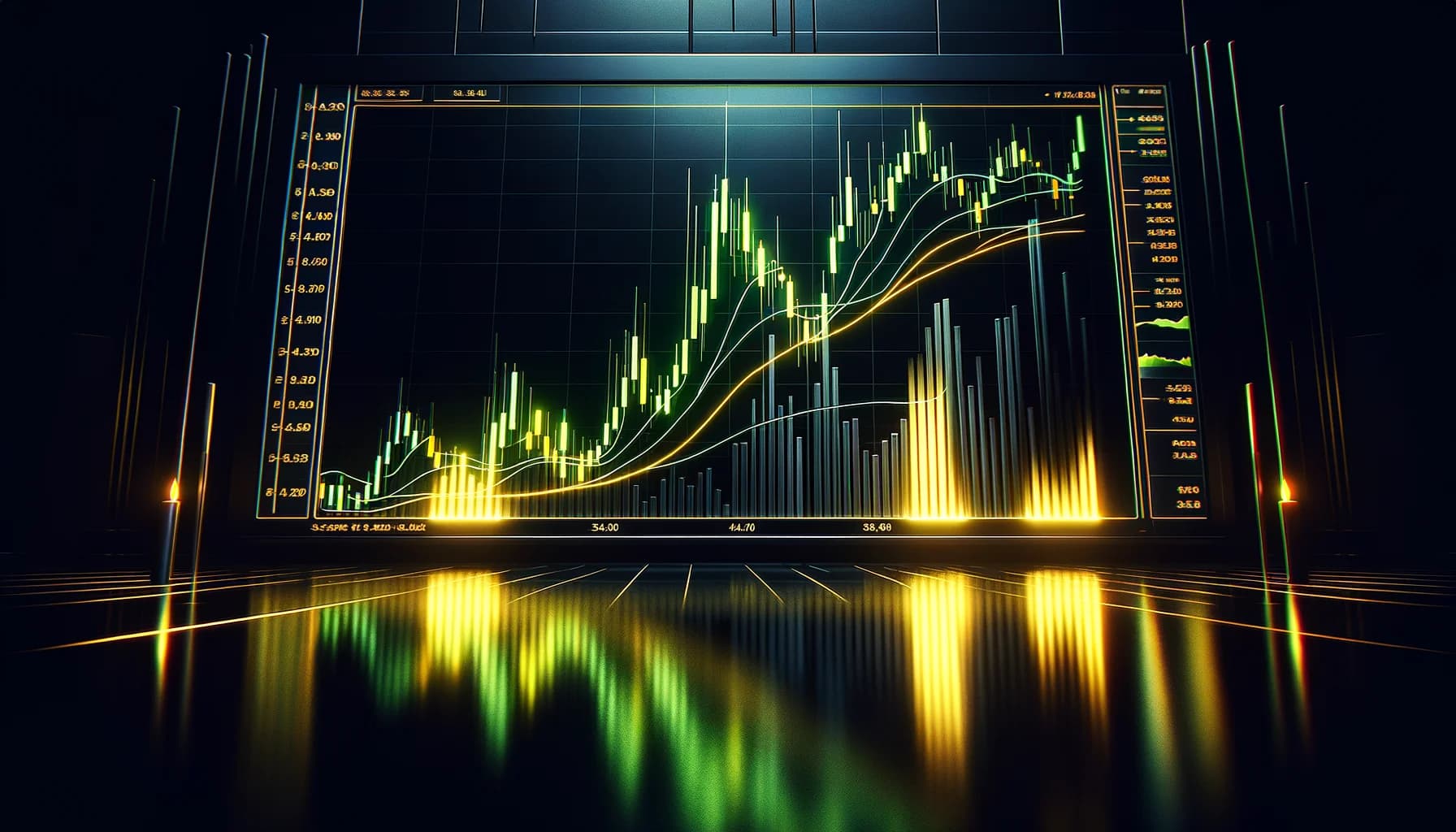
The Simple Moving Average calculates the average closing price over a specific number of periods, then plots this value as a line on your chart. As new prices come in, old ones drop out, creating a "moving" average that follows price action.

Unlike oscillators that bounce between fixed levels, the SMA moves with price. When Apple trades at $150, its 20-period SMA might sit at $148. When Apple rallies to $170, that same 20-period SMA will have climbed higher too.

The SMA serves three main purposes: trend identification, dynamic support and resistance, and signal generation through crossovers. Most professional traders use it for the first two rather than trying to time entries with crossover signals.

💡 Nice to Know: The SMA was one of the first technical indicators ever used, dating back to rice traders in 18th century Japan. They calculated it by hand using an abacus.

FTMO.com - Für seriöse Trader

How SMA is Calculated

The SMA calculation couldn't be simpler: add up the closing prices for your chosen period, then divide by the number of periods. For a 10-period SMA, you add the last 10 closing prices and divide by 10.

Here's a 5-period SMA example with closing prices of $100, $102, $101, $103, $104: SMA = (100 + 102 + 101 + 103 + 104) ÷ 5 = $102

When the next bar closes at $105, the oldest price ($100) drops out: New SMA = (102 + 101 + 103 + 104 + 105) ÷ 5 = $103

This equal weighting is both the SMA's strength and weakness. It treats a price from 20 periods ago the same as yesterday's price, which creates stability but also lag.

⚠️ Watch Out: The SMA is a lagging indicator — it tells you what happened, not what will happen. Don't expect it to predict reversals or perfectly time entries.

Key SMA Periods — 20, 50, 100, 200

Different SMA periods serve different purposes, and certain numbers have become standard because they're so widely watched. Here's what matters:

The 20 SMA represents roughly one month of trading (20 trading days). It's your short-term trend gauge and often acts as the first line of support or resistance in trending markets. Day traders love it for pullback entries.

The 50 SMA covers about 2.5 months and provides a medium-term trend perspective. It's less noisy than the 20 SMA but more responsive than the 200. Many swing traders use it as their primary trend filter.

The 100 SMA gets less attention but offers a nice middle ground between the 50 and 200. Some traders prefer it for avoiding the whipsaws of shorter SMAs while maintaining more responsiveness than the 200.

The 200 SMA is the granddaddy of all moving averages. It represents roughly 200 trading days (about 10 months) and is the most watched level in all of trading. When institutions talk about "trend," they're usually referring to price position relative to the 200 SMA.

🎯 Pro Tip: The 200 SMA on the Daily chart is the most watched level in all of trading — institutional and algorithmic traders use it as a trend filter. Above it = bullish bias, below it = bearish bias.

💡 Nice to Know: The 200 SMA became standard because it roughly represents one trading year (252 trading days) rounded down to a nice number. It stuck because everyone started watching it.

FTMO.com - Für seriöse Trader

SMA as Dynamic Support and Resistance

Unlike horizontal support and resistance levels that remain fixed, the SMA creates dynamic levels that move with price. This makes it particularly powerful in trending markets where static levels get left behind.

In an uptrend, the SMA often acts as a support level. Price pulls back to the 20 SMA, finds buyers, and resumes the upward move. Think of it like a moving floor that rises with the trend.

In a downtrend, the SMA becomes dynamic resistance. Price rallies up to the 50 SMA, meets sellers, and continues lower. The SMA acts like a descending ceiling that pressures price down.

The key insight: the longer the SMA period, the stronger the support or resistance. The 200 SMA carries more weight than the 20 SMA because more traders watch it and more algorithms trade off it.

🎯 Pro Tip: Use shorter SMAs (10, 20) for entries and exits, longer SMAs (50, 200) for trend direction. The 20 SMA is perfect for pullback entries in strong trends.

⚠️ Watch Out: In choppy/sideways markets, SMA generates constant false crossover signals. The dynamic support/resistance concept only works when there's an actual trend.

SMA Crossover Strategies — Golden Cross & Death Cross

SMA crossovers occur when a faster (shorter period) SMA crosses above or below a slower (longer period) SMA. The most famous crossovers have earned legendary names that every trader knows.

The Golden Cross happens when the 50 SMA crosses above the 200 SMA, signaling a potential long-term bullish trend change. Media outlets report on Golden Crosses, and they often mark the beginning of major bull markets.

The Death Cross is the opposite — the 50 SMA crossing below the 200 SMA, suggesting a bearish trend shift. These crossovers are widely followed because they filter out short-term noise and focus on significant trend changes.

Shorter-period crossovers like the 10/20 or 20/50 provide faster signals but with more false positives. They work well in strongly trending markets but get chopped up in sideways action.

For a detailed breakdown of crossover timing and practical setups, check out our complete guide on MA Crossover Strategy — Golden Cross & Death Cross Trading.

🎯 Pro Tip: The 50/200 SMA crossover (Golden/Death Cross) is a lagging signal — use it for trend confirmation, not timing. By the time it triggers, the move is often well underway.

⚠️ Watch Out: Don't use SMA for entries in ranging markets — it only works in trends. You'll get whipsawed constantly as price bounces between moving averages.

FTMO.com - Für seriöse Trader

SMA vs EMA — When to Use Which

The eternal debate: Simple Moving Average or Exponential Moving Average? Both have their place, and understanding when to use each makes you a better trader.

The SMA gives equal weight to all periods in its calculation. This creates smoother lines with less noise but more lag. It's like a steady, reliable friend who takes time to change their opinion.

The EMA gives more weight to recent prices, making it more responsive to current price action. It reacts faster to changes but generates more false signals. Think of it as your emotional friend who changes their mind quickly.

Use the SMA when you want stability and widely-watched levels. The 200 SMA is crucial because institutions and algorithms key off it. For long-term trend analysis and major support/resistance, stick with SMA.

Use the EMA when you need faster signals and more responsive support/resistance levels. Short-term traders prefer EMAs because they adapt more quickly to changing market conditions.

Many successful traders use both: SMA for the big picture (trend direction via 200 SMA) and EMA for tactical entries and exits. You don't have to choose just one.

💡 Nice to Know: The difference between SMA and EMA becomes more pronounced with longer periods. A 200 EMA will hug price much closer than a 200 SMA, sometimes making the EMA less reliable as a widely-watched level.

Multiple SMA Setups

Using multiple SMAs simultaneously creates powerful visual representations of trend strength and potential reversal zones. This approach, often called a moving average ribbon, provides more nuanced market analysis than single SMA systems.

A classic setup uses the 20, 50, and 200 SMAs together. In a strong uptrend, they stack in perfect order: price above 20 SMA, 20 SMA above 50 SMA, 50 SMA above 200 SMA. This alignment screams "trend following opportunity."

When the SMAs start converging or crossing each other, it signals trend weakness or potential reversal. The more tangled the SMAs become, the choppier the market conditions.

Some traders use even more SMAs — 10, 20, 30, 40, 50 — creating a colorful ribbon that expands and contracts with volatility. When the ribbon spreads wide, the trend is strong. When it compresses, expect consolidation or reversal.

For an in-depth look at multiple moving average systems, explore our guide on MA Ribbon — Visualizing Trend Strength with Multiple Moving Averages.

🎯 Pro Tip: When price is above the 200 SMA, only look for long setups. Below it, only shorts. This simple rule eliminates counter-trend trades that fight the institutional bias.

FTMO.com - Für seriöse Trader

SMA on Different Timeframes

The same SMA period behaves very differently across timeframes, and understanding these differences is crucial for proper application. A 200 SMA on a 5-minute chart covers about 17 hours of trading, while a 200 SMA on a daily chart spans 10 months.

Intraday timeframes (1-minute to 1-hour) use SMAs for quick support/resistance and short-term trend identification. The 20 SMA on a 15-minute chart might provide perfect pullback entries during a day-long trend.

Daily charts are where SMAs truly shine. The 20, 50, and 200 SMAs on daily charts are watched by institutions worldwide. These levels often hold exactly because so many traders expect them to hold.

Weekly and monthly charts with SMAs reveal the really big picture. A monthly chart with a 12 SMA shows the one-year trend that drives everything else. Position traders and fund managers live in these timeframes.

The key principle: shorter timeframes need shorter SMA periods for responsiveness, while longer timeframes can use longer SMA periods for stability. A 200 SMA on a 1-minute chart is meaningless noise, but on a daily chart it's gospel.

Understanding trend types across different timeframes helps you align your SMA analysis with the appropriate market structure for your trading style.

💡 Nice to Know: Many institutional algorithms are programmed to respect the 200 SMA on daily charts, creating self-fulfilling prophecies when price approaches this level.

Common SMA Mistakes

Even simple indicators can be misused, and the SMA has its share of common traps that catch new traders repeatedly. Avoiding these mistakes will save you money and frustration.

Mistake #1: Using SMA in sideways markets. The SMA works brilliantly in trends but becomes a nightmare in choppy, range-bound conditions. You'll get constant false crossover signals as price whipsaws around the moving average.

Mistake #2: Treating all SMA periods equally. A crossover of the 5/10 SMA doesn't carry the same weight as a 50/200 crossover. The more traders watching a particular SMA combination, the more significant its signals become.

Mistake #3: Expecting perfect timing. The SMA is designed to smooth price action, which means it will always lag. Don't expect it to catch exact tops and bottoms — that's not its job.

Mistake #4: Ignoring the slope. A flat or declining SMA in an alleged uptrend is a red flag. The SMA should be rising in uptrends and falling in downtrends. When it's flat, the trend is questionable.

Mistake #5: Over-optimizing periods. Spending hours testing whether a 17 SMA works better than a 20 SMA is usually pointless. Stick with widely-watched periods that create self-fulfilling prophecies.

⚠️ Watch Out: Don't fall into the "perfect period" trap. The SMA works because other traders use it, not because of mathematical magic. Stick with standard periods that everyone watches.

FTMO.com - Für seriöse Trader

Key Takeaways

The Simple Moving Average proves that sometimes the oldest tools are still the best tools. While flashier indicators promise better results, the SMA endures because it does exactly what it's supposed to do: smooth price action and reveal trends.

Master the big three periods: 20 SMA for short-term pullbacks and entries, 50 SMA for medium-term trend analysis, and 200 SMA for the institutional trend bias that rules everything else.

Remember that the SMA's power comes from its widespread adoption. When millions of traders and thousands of algorithms all watch the same 200 SMA level, that level becomes incredibly significant. It's not magic — it's crowd psychology in action.

Use the SMA as a trend filter and dynamic support/resistance tool, not a perfect timing mechanism. Let other indicators handle precise entries while the SMA keeps you on the right side of the major trend.

The most successful traders combine SMAs with other forms of analysis rather than relying on them alone. Think of the SMA as your North Star — it shows you the general direction, but you still need other tools to navigate the journey.

Whether you're building a foundation in technical analysis or developing sophisticated trend following systems, the Simple Moving Average will be there, doing its job quietly and effectively.

FAQ

What is the best SMA period?

There is no single best period. The 200 SMA is the most important for trend direction, watched by institutions worldwide. The 20 SMA is most useful for short-term pullback entries in trending markets. The 50 SMA offers a good middle ground between responsiveness and stability.

Should I use SMA or EMA?

Use SMA for institutional levels (200 SMA) and longer-term trend analysis since these are widely watched levels. Use EMA for responsive signals on shorter timeframes where speed matters more than consensus. Many traders use both — SMA for the big picture, EMA for entries.

What is a Golden Cross?

A Golden Cross occurs when the 50 SMA crosses above the 200 SMA, signaling a long-term bullish trend shift. The opposite (Death Cross) signals bearish conditions when the 50 crosses below the 200. Both are lagging signals but widely followed by institutions and media.


Next Read: EMA Indicator — Exponential Moving Average Guide — Learn how the EMA responds faster to price changes and when to use it instead of SMA.

Was this helpful?

Continue Reading

EMA Indicator — Exponential Moving Average Guide

Learn how the EMA responds faster to price changes and when to use it instead of SMA.

Continue Learning

SMA Indicator — Simple Moving Average Explained | indicator.trading