indicator.trading
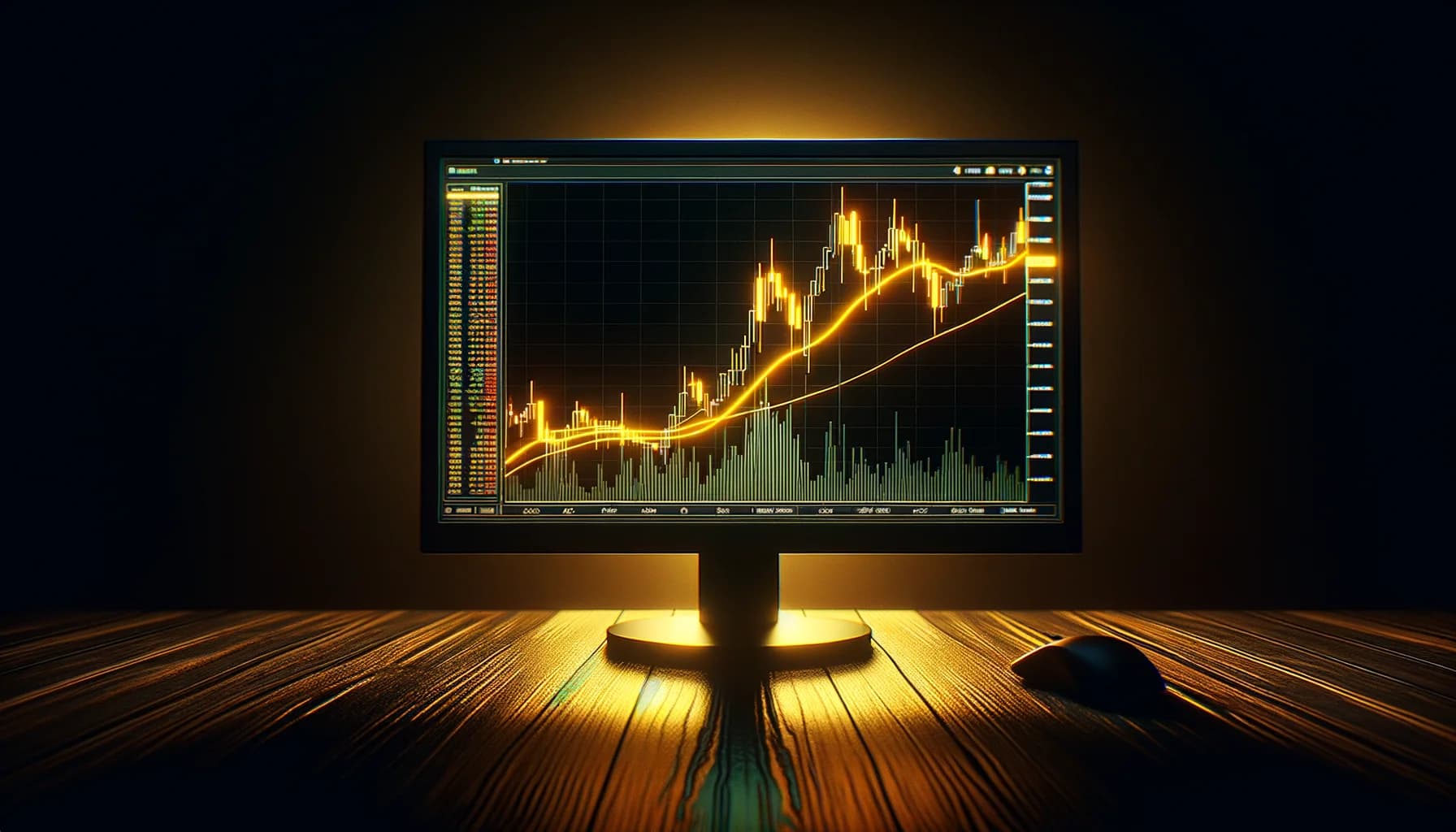
EMA vs SMA on candlestick chart with faster EMA highlighted

EMA — Why It Reacts Faster and When to Use It

beginnerTrend Indicators10 min read

The Exponential Moving Average (EMA) gives more weight to recent price action, making it react faster than the Simple Moving Average. While the SMA treats all prices equally, the EMA cares more about what happened yesterday than what happened 20 days ago.

This faster response makes the EMA a favorite among day traders and swing traders who want to catch trends early. But that same sensitivity creates more false signals in choppy markets.

What is the EMA

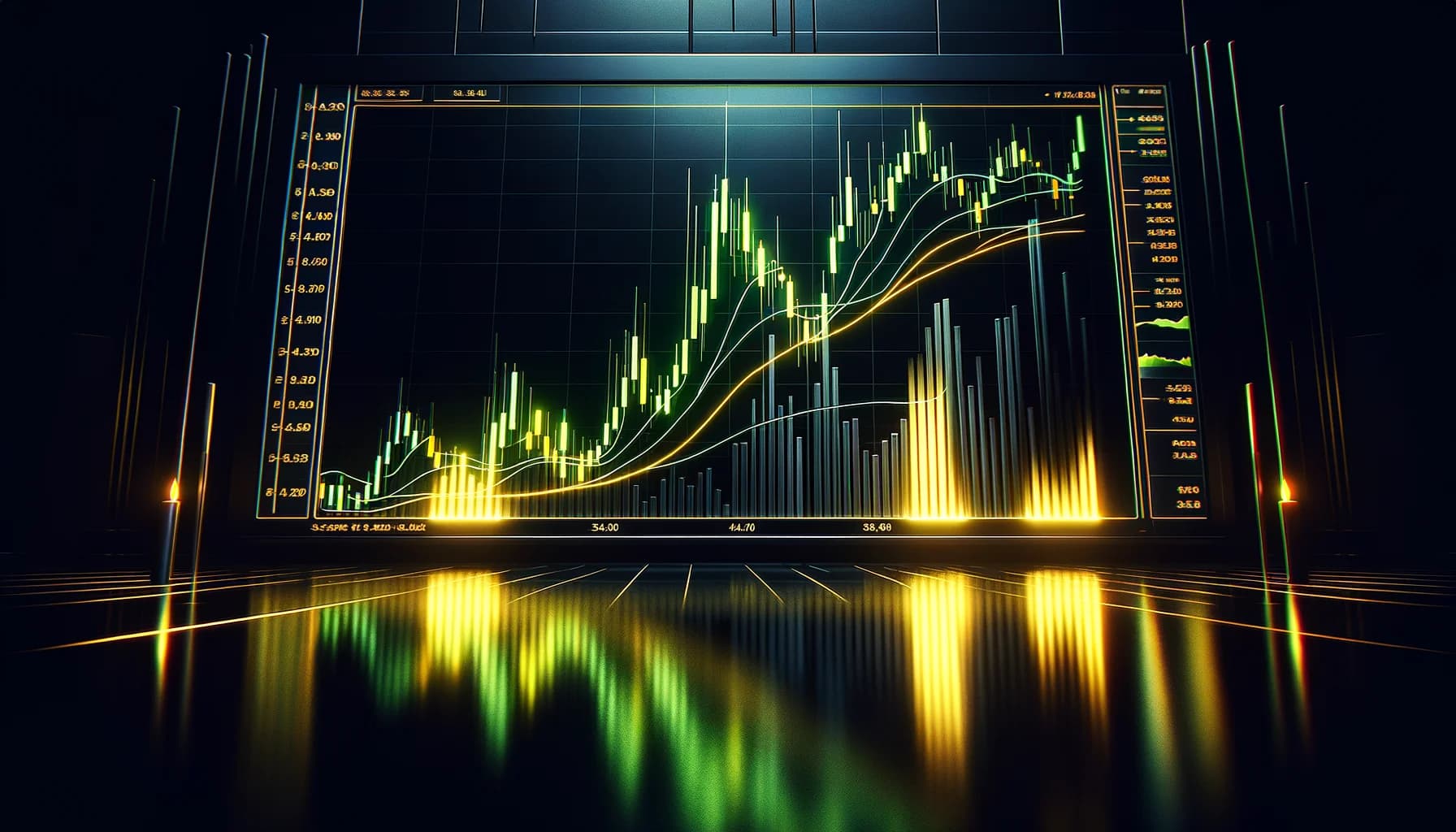
The EMA is a trend-following indicator that smooths price action by creating a continuously updated average price. Unlike the SMA Indicator — Simple Moving Average Explained, which gives equal weight to all periods, the EMA applies exponential weighting that decreases as data gets older.

Think of it like memory — recent events are vivid and clear, while older memories fade. The EMA works the same way with price data.

The indicator appears as a curved line on your chart that hugs price action more closely than an SMA. During trends, price often bounces off the EMA like a rubber ball hitting a trampoline.

💡 Nice to Know: The EMA never truly "forgets" old data — it just gives it exponentially less importance. Even a 50-period EMA technically includes price data from hundreds of periods ago, just with microscopic weighting.

FTMO.com - Für seriöse Trader

EMA vs SMA — The Key Difference

The Simple Moving Average adds up 20 prices and divides by 20. Every price gets equal treatment. The Exponential Moving Average says "screw that" and gives the most recent price the biggest say in where the line goes.

Here's what this looks like in practice: When AAPL gaps up 3% on earnings, the 20 EMA will jump toward that new price much faster than the 20 SMA. The SMA treats that 3% gap the same as every other day in the calculation.

This creates different behavior patterns. The EMA hugs trends tighter and changes direction faster. The SMA stays smoother and takes longer to acknowledge trend changes.

In trending markets, the EMA gives you earlier entry and exit signals. In choppy markets, the EMA generates more head fakes and whipsaws.

🎯 Pro Tip: Use both on the same chart. The EMA shows you short-term momentum while the SMA reveals longer-term institutional levels. When they diverge, pay attention — something's changing.

How EMA is Calculated (Weighting Factor)

The EMA uses a multiplier called the weighting factor that determines how much influence the latest price gets. The formula is:

Weighting Factor = 2 ÷ (Period + 1)

For a 21 EMA: 2 ÷ (21 + 1) = 0.0909 or about 9%

This means today's closing price gets 9% weight in the 21 EMA calculation. Yesterday's EMA gets 91% weight. But here's the clever part — yesterday's EMA already included the day before with decreasing weight, creating the exponential decay.

You don't need to calculate this manually. Every trading platform does it automatically. But understanding the math helps you grasp why shorter EMAs react more dramatically to price moves.

The shorter the period, the higher the multiplier. A 9 EMA gives today's price about 20% weight. A 200 EMA gives it just 1% weight.

⚠️ Watch Out: Don't get lost in the math. Focus on how the EMA behaves on your charts. The calculation matters less than understanding when to trust its signals.

FTMO.com - Für seriöse Trader

Different EMA periods serve different purposes. Here's what actually works:

9 EMA — The sprinter. Reacts fast, changes direction quickly. Day traders use it for scalping and short-term momentum trades. Gets chopped up in sideways markets.

21 EMA — The sweet spot for many traders. Fast enough to catch trends early, slow enough to filter out some noise. Works well for both day trading and swing trading.

50 EMA — The institutional favorite for swing traders. Provides medium-term trend direction. Price often respects it during pullbacks in strong trends.

200 EMA — The big kahuna. Shows long-term trend direction. When price is above the 200 EMA, institutions consider the trend bullish. Below it, bearish.

The magic happens when you combine different speeds. Fast EMAs crossing above slow EMAs signal trend changes. Price bouncing off EMAs signals trend continuation.

💡 Nice to Know: The 200 EMA on lower timeframes (1H, 4H) often acts as institutional support and resistance. Algorithms and big money use these levels for entries and exits.

EMA for Day Trading vs Swing Trading

Day traders love fast EMAs because they need responsive signals for quick profits. The 9/21 EMA combination works well for intraday setups. When the 9 EMA crosses above the 21 EMA, it often signals short-term bullish momentum.

For day trading, use EMAs on 5-minute and 15-minute charts. Look for price to pull back to the 21 EMA during trends — it often provides low-risk entry opportunities.

Swing traders prefer slower EMAs that filter out daily noise. The 21/50 EMA combo works well for holding positions for days or weeks. The 50 EMA often acts as dynamic support in strong trends.

Swing traders typically use EMAs on 1-hour and daily charts. A stock trending above its 50 EMA with rising momentum often continues higher for weeks.

The key difference: day traders need EMAs that react to every meaningful price move. Swing traders need EMAs that ignore short-term fluctuations and focus on bigger picture trends.

🎯 Pro Tip: The 9/21 EMA combo is one of the most popular setups for both intraday and swing trading. Master this combination before adding more complexity.

FTMO.com - Für seriöse Trader

EMA Crossover Strategies

EMA crossovers generate some of the most reliable trend-following signals. When a fast EMA crosses above a slow EMA, it suggests bullish momentum. When it crosses below, bearish momentum.

The MA Crossover Strategy — Golden Cross & Death Cross Trading uses these signals for entry and exit points. A golden cross occurs when a short-term EMA crosses above a long-term EMA. A death cross is the opposite.

But here's what novice traders miss: the crossover is just the alert, not the entry. Wait for confirmation. Look for volume, price action, or other indicators supporting the move.

Strong crossover setups often happen at key support or resistance levels. When the 9 EMA crosses the 21 EMA right at a previous swing high that's now support, pay attention.

Best crossover combinations:

  • 9/21 EMA for day trading
  • 12/26 EMA (used in MACD)
  • 50/200 EMA for long-term trends

⚠️ Watch Out: A fast EMA crossing a slow EMA is not an automatic entry signal. Wait for confirmation from volume, momentum, or price action before pulling the trigger.

During strong trends, the EMA acts like a moving support or resistance line. In uptrends, price often bounces off the EMA and continues higher. In downtrends, the EMA caps rallies.

This creates excellent low-risk entry opportunities. Instead of chasing breakouts, wait for price to pull back to the EMA. If it holds as support, enter long with a tight stop below the EMA.

The 21 EMA works particularly well for this strategy. In strong trending stocks, price repeatedly tests the 21 EMA and bounces. Each bounce offers a fresh entry with defined risk.

Look for EMAs that are sloping in the direction of the trend. A rising 21 EMA suggests bullish momentum. A falling 21 EMA suggests bearish momentum.

The steeper the EMA slope, the stronger the trend. When the EMA flattens out, the trend is losing momentum.

🎯 Pro Tip: Use the 21 EMA as a pullback entry zone during strong trends. Price repeatedly bounces off it like a trampoline. When it breaks, the trend is probably changing.

FTMO.com - Für seriöse Trader

Multi-EMA Setups (9/21 or 8/21)

Professional traders often use multiple EMAs to gauge trend strength and momentum. The 9/21 EMA combination is battle-tested and works across different timeframes.

In this setup, the 9 EMA shows short-term momentum while the 21 EMA shows intermediate trend. When both EMAs are rising and price is above both, you have a strong bullish setup.

The 8/21 EMA combination is popular among Fibonacci enthusiasts (8 and 21 are Fibonacci numbers). The behavior is similar to 9/21 but slightly more responsive.

Here's how to read multi-EMA setups:

  • Both EMAs rising + price above both = strong uptrend
  • EMAs flat + price chopping around = sideways market
  • Both EMAs falling + price below both = strong downtrend

The distance between EMAs also matters. When they're expanding, the trend is accelerating. When they're contracting, momentum is fading.

Some traders add the MA Ribbon — Visualizing Trend Strength with Multiple Moving Averages for even more granular trend analysis.

💡 Nice to Know: The 8/21 EMA combo gained popularity because both numbers are in the Fibonacci sequence. Whether this adds predictive value is debatable, but the combination works well regardless.

When SMA is Better Than EMA

The EMA isn't always superior. Simple Moving Averages excel in specific situations where you want stability over responsiveness.

Long-term trend identification: The 200 SMA is an institutional standard for defining bull and bear markets. It's less noisy than the 200 EMA and provides clearer long-term signals.

Ranging markets: When assets trade sideways, the SMA's stability prevents excessive whipsaws. The EMA's sensitivity becomes a liability in choppy conditions.

Support and resistance levels: Round-number SMAs (50, 100, 200) often act as stronger psychological levels than EMAs. More traders watch these levels, creating self-fulfilling prophecies.

Confirmation signals: Use SMAs to confirm EMA signals. When both the 50 EMA and 50 SMA agree on trend direction, the signal carries more weight.

The best approach combines both. Use EMAs for responsive trading signals and SMAs for broader market context and key levels.

⚠️ Watch Out: EMA is more sensitive to whipsaws than SMA. In choppy markets, it generates more false signals. Know when to step aside.

FTMO.com - Für seriöse Trader

Key Takeaways

The EMA reacts faster than the SMA because it weights recent prices more heavily. This makes it excellent for catching trends early but also more prone to false signals in choppy markets.

Master the 9/21 EMA combination first. It works across timeframes and gives you both short-term momentum (9 EMA) and intermediate trend (21 EMA) in one setup.

Use EMAs as dynamic support and resistance during trends. Price often bounces off key EMAs, providing low-risk entry opportunities with clear stop levels.

Don't rely on EMA crossovers alone. Wait for confirmation from volume, price action, or other indicators before entering trades.

The EMA works best in trending markets. When markets are ranging or choppy, consider switching to other indicators or sitting on your hands.

Combine EMAs with SMAs for the best of both worlds. EMAs for responsive signals, SMAs for key institutional levels and long-term trend context.

⚠️ Watch Out: Don't blindly trust institutional levels like the 200 EMA without confirming with actual price action. Levels are only as strong as the buying or selling interest around them.

FAQ

Is EMA better than SMA?

Neither is universally better. EMA reacts faster, making it superior for short-term trading and responsive signals. SMA excels at identifying long-term institutional levels and filtering noise. Most professional traders use both for different purposes.

What EMA periods should I use?

For day trading, start with 9 and 21 EMA. For swing trading, use 21 and 50 EMA. For long-term trend direction, add the 200 EMA. Master one combination thoroughly before adding complexity to your setup.

How do I know when EMA signals are reliable?

Look for confirmation from multiple factors: volume, price action at key levels, and agreement between different timeframes. The strongest EMA signals occur when fast and slow EMAs align with the broader trend and fundamental momentum.


Ready to dive deeper into moving average-based indicators? The MACD Indicator — Complete Trading Guide is built from EMAs — learn how it turns moving average crossovers into a powerful momentum indicator that many pros consider superior to simple EMA crossovers.

Was this helpful?

Continue Reading

MACD Indicator — Complete Trading Guide

The MACD is built from EMAs — learn how it turns moving average crossovers into a powerful momentum indicator.

Continue Learning

EMA Indicator — Exponential Moving Average Guide | indicator.trading