indicator.trading
Liquidity Sweeps — How Institutions Engineer Stop Hunts

Liquidity Sweeps — How Institutions Engineer Stop Hunts

intermediateSmart Money Concepts10 min read

Picture this: You're short EUR/USD at a perfect resistance level. Price has been respecting this zone for hours. Then suddenly, it spikes 15 pips higher, stops you out, and immediately reverses back down to continue the original trend.

Welcome to the world of liquidity sweeps — one of the most frustrating yet predictable games institutions play with retail traders.

A liquidity sweep happens when price briefly moves beyond a key level (like a swing high or low) to trigger stop losses, then quickly reverses in the opposite direction. Think of it as institutional traders going shopping for stops before continuing their real agenda.

This isn't random market noise. It's calculated engineering designed to fuel large positions with the liquidity sitting just beyond obvious levels. Once you understand the mechanics, you'll stop being the victim and start being the predator.

The beauty of liquidity sweeps lies in their predictability. When you see three equal highs on a downtrend, you can almost guarantee institutions will push price just above those highs to grab stops before resuming the downward move. The question isn't if — it's when and how violently.

Understanding sweeps transforms your entire approach to support and resistance. Instead of seeing these levels as walls that price bounces from, you start seeing them as magnets that price gets pulled through temporarily. This shift in perspective alone will save you countless stopped-out trades.

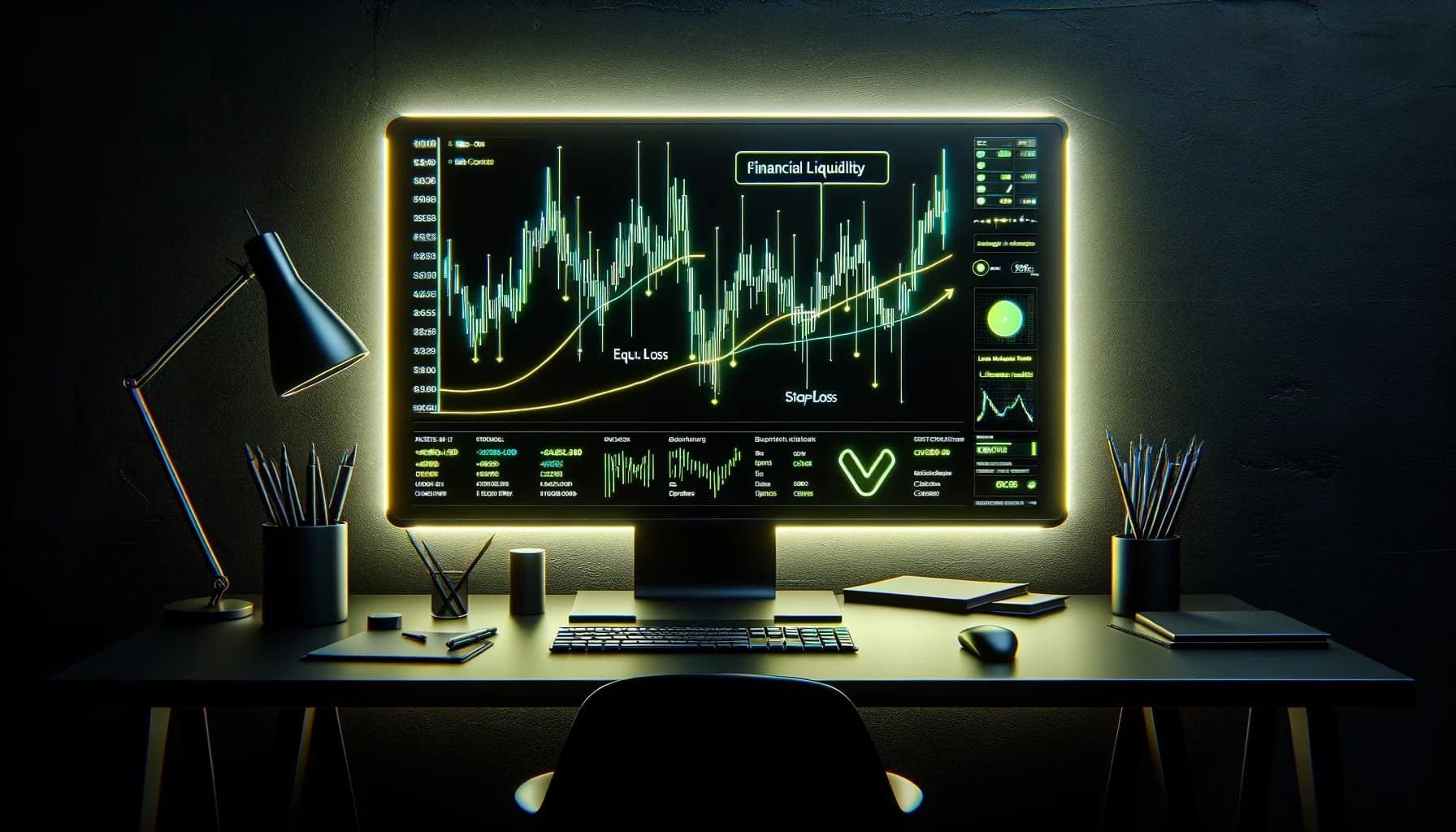
What Is a Liquidity Sweep

Every liquidity sweep follows the same three-act drama: setup, execution, and reversal.

The setup begins when price creates obvious levels where retail traders naturally place their stops. These could be recent swing highs, support levels, or those tempting round numbers like 1.2000 on EUR/USD. Smart money knows exactly where these stops cluster because they follow basic technical analysis principles.

During execution, price violently breaks through these levels with conviction. The move often looks like a legitimate breakout — strong momentum, decent volume, maybe even some news to justify it. Retail traders either get stopped out of existing positions or chase the breakout, thinking they're catching a new trend.

The reversal happens within minutes or sometimes seconds. Price snaps back through the level it just broke, often with even more violence than the initial sweep. Those who chased the breakout are now underwater, and those who got swept are watching their original analysis play out perfectly — without them.

⚠️ Watch Out: The most dangerous sweeps happen during news releases or session overlaps when volatility naturally increases. Don't assume every spike during NFP is just news-driven chaos.

Real-world example: On EUR/USD's 4-hour chart, price creates three equal highs around 1.0850 during a downtrend. Instead of respecting this resistance, price spikes to 1.0867, triggers stops, then plummets 80 pips over the next 6 hours. Classic sweep and reverse.

The key insight is that institutions need liquidity to fill their large orders efficiently. When Deutsche Bank wants to sell 500 million EUR, they can't just hit the market all at once without causing massive slippage. Instead, they engineer these sweeps to create the opposing liquidity they need.

FTMO.com - Für seriöse Trader

Buy-Side vs Sell-Side Liquidity

Buy-side liquidity sits above swing highs and resistance levels. This is where traders place sell stops on their long positions or stop losses on their shorts. When price sweeps above these levels, it's hunting buy-side liquidity.

Sell-side liquidity pools below swing lows and support levels. Here you'll find buy stops from short sellers and stop losses from long positions. Sweeps below these levels target sell-side liquidity.

The institutional playbook is beautifully simple: During a downtrend, sweep buy-side liquidity (above highs) to fuel more selling. During an uptrend, sweep sell-side liquidity (below lows) to fuel more buying.

💡 Nice to Know: Institutions often alternate between buy-side and sell-side sweeps within the same trend, creating those frustrating whipsaw moves that keep retail traders guessing.

Think of it like a pendulum. In a bearish market, price might sweep sell-side liquidity first (fake rally), then violently sweep buy-side liquidity before continuing down. Each sweep serves a purpose: gather liquidity to fuel the next leg of the real move.

The most profitable sweeps happen when price targets external liquidity — stops sitting beyond the current range. Internal sweeps (within recent highs and lows) are often just noise. External sweeps signal institutional commitment to a directional move.

You can map liquidity zones by drawing horizontal lines at obvious highs and lows, then extending them right. The longer price respects these levels without touching them, the more liquidity builds up. Eventually, that liquidity becomes too tempting for institutions to ignore.

Equal Highs and Equal Lows

Equal highs and equal lows are liquidity magnets disguised as support and resistance. When price creates two or more swing points at nearly identical levels, it's screaming "stops here" to anyone paying attention.

The psychology behind equal levels is brutally simple. Retail traders see a double top at 1.2050 and place their stops at 1.2055. They see triple bottoms at 1.1980 and put stops at 1.1975. This predictable behavior creates massive liquidity pools that institutions can't resist sweeping.

Equal highs in a downtrend are prime targets for buy-side liquidity sweeps. Price will often rally into these levels multiple times, creating a false sense of resistance strength, then violently break through to grab stops before resuming the downward move.

Equal lows during uptrends work identically but in reverse. Multiple touches create sell-side liquidity buildup below the lows. The eventual sweep through these levels provides fuel for the next upward leg.

🎯 Pro Tip: The more times price touches an equal level without breaking it, the more violent the eventual sweep becomes. Three touches are standard; four or more touches create explosive liquidity releases.

Real example from GBP/USD: Price created four equal lows around 1.2180 over two days during an uptrend. On the fifth approach, price spiked down to 1.2164, triggered massive stops, then rocketed 120 pips higher within 4 hours. The sweep was surgical and profitable for those positioned correctly.

The beauty of equal levels is their objectivity. You don't need complex calculations or subjective interpretations. Either price is making equal highs/lows or it isn't. This clarity makes them perfect for algorithmic execution by smart money.

Don't confuse equal levels with exact levels. A swing high at 1.2050 and another at 1.2052 qualify as equal highs. Institutions aren't looking for perfect precision — they're hunting the general area where stops cluster.

FTMO.com - Für seriöse Trader

Identifying Sweeps in Real-Time

Spotting sweeps as they happen requires understanding the difference between institutional hunting and genuine breakouts. The clues are subtle but consistent once you know what to look for.

Volume patterns tell the real story. Genuine breakouts maintain or increase volume as they develop. Sweeps often show initial volume spikes followed by rapid volume decline as price reverses. It's like watching someone slam on the brakes after accelerating.

Price action behavior around the sweep level reveals institutional intent. Real breakouts typically retest the broken level as new support or resistance. Sweeps blow through levels without looking back, then reverse sharply without any retest of the swept level.

Time duration separates sweeps from breakouts. Most liquidity sweeps complete their reversal within 5-15 minutes on intraday timeframes. Breakouts develop over hours or days. If price snaps back to the pre-sweep range quickly, you witnessed a hunt.

The wick-to-body ratio on the sweep candle provides another clue. Sweep candles often have small bodies with long wicks extending beyond the key level. The wick represents the hunt; the body shows where price actually wanted to close.

💡 Nice to Know: Many sweeps happen during the last 30 minutes of major trading sessions when institutions need to clean up positions and hunt stops before markets close.

Context matters enormously. A sweep above equal highs during a 3-week downtrend carries different weight than the same sweep during a strong uptrend. Always consider the broader market structure when evaluating sweep significance.

Multiple timeframe confirmation strengthens sweep identification. A 5-minute sweep that aligns with 4-hour resistance creates higher probability setups than isolated lower timeframe moves. The institutional footprint becomes clearer across multiple timeframes.

Watch for momentum divergence during sweeps. Price might make new highs, but momentum indicators often show negative divergence. This disconnect reveals the artificial nature of the move and hints at the coming reversal.

Sweep + Order Block Entry

Combining liquidity sweeps with order blocks creates one of the highest-probability entry strategies in smart money concepts. An order block represents the last bullish or bearish candle before a strong move in the opposite direction — essentially institutional footprints left in the market.

The setup unfolds in three stages: First, identify an order block from a previous session or significant move. Second, wait for price to sweep liquidity beyond a key level. Third, enter when price returns to the order block for institutional support or resistance.

Here's the mechanical approach: After price sweeps buy-side liquidity (above highs), look for bearish order blocks above the current price. These represent areas where institutions previously initiated selling. When price returns to these blocks after the sweep, institutions often add to their positions.

Entry timing requires patience and precision. Don't enter immediately after the sweep — wait for price to return to the order block. The best entries occur when price reaches the order block with a clear rejection candle: a wick into the block followed by immediate reversal.

⚠️ Watch Out: Not every order block holds after a sweep. Look for blocks that align with other confluence factors like previous structure levels or significant volume areas.

Real example from USD/JPY: Price swept above equal highs at 145.80, reaching 146.15 before reversing. A bearish order block sat at 145.90-146.00 from the previous day's selling activity. When price returned to this block 2 hours later, it provided a perfect short entry for the 200-pip decline that followed.

Position sizing becomes crucial with sweep + order block entries. These setups often provide excellent risk-to-reward ratios because your stop can sit just beyond the order block, while targets can extend to previous structure levels or liquidity zones.

The psychological beauty of this strategy lies in positioning yourself with institutional flow rather than against it. You're essentially piggybacking on the same liquidity hunt that probably stopped you out in previous trades.

FTMO.com - Für seriöse Trader

Sweep + FVG Entry

Fair Value Gaps (FVGs) combined with liquidity sweeps create another powerful entry methodology. An FVG occurs when price moves so aggressively that it leaves an unfilled gap between candle wicks — a sign of institutional urgency and imbalance.

The logic behind sweep + FVG entries centers on market inefficiency. When institutions sweep liquidity, they often create or reveal FVGs that price needs to fill. These gaps act as magnets, drawing price back even after violent moves.

Bullish FVGs form during strong upward moves and appear as gaps below current price. After a sell-side liquidity sweep (below lows), these gaps often provide support for the reversal move. Price gets drawn back to fill the inefficiency before continuing higher.

Bearish FVGs develop during aggressive downward moves and show as gaps above current price. Following a buy-side liquidity sweep (above highs), these gaps frequently offer resistance as price retraces to fill the imbalance.

The entry mechanism requires watching for two-step price action: the initial sweep that creates or reveals the FVG, followed by the return to fill the gap. Your entry occurs as price reaches the FVG boundaries with confirmation of reversal or continuation.

🎯 Pro Tip: The most reliable sweep + FVG setups occur when the gap aligns with other smart money concepts like order blocks or previous market structure. Confluence increases probability significantly.

Consider this EUR/GBP example: During a downtrend, price swept sell-side liquidity below 0.8520, reaching 0.8495. The sweep revealed a bearish FVG from 0.8515-0.8525. When price rallied back to fill this gap, it provided an excellent short entry for the continuation of the downtrend.

Risk management with FVG entries involves placing stops just beyond the gap boundaries. If price fully fills and closes beyond the FVG, the inefficiency is complete, and the setup invalidates. Targets typically extend to the next liquidity zone or structural level.

The timeframe selection impacts FVG reliability dramatically. 15-minute and 4-hour FVGs tend to provide the most reliable entries after sweeps. 1-minute gaps often get filled by noise, while daily gaps might take too long to develop into entries.

Stop Hunt vs Normal Volatility

Distinguishing between intentional stop hunts and natural market volatility prevents you from seeing conspiracies in every price move. Not every spike beyond a level represents institutional manipulation — sometimes markets just move.

Stop hunts exhibit specific characteristics: sharp, violent moves beyond key levels followed by immediate reversals. The move often lacks fundamental justification and occurs during low-volume periods when institutions can manipulate price more easily.

Normal volatility creates moves that develop gradually with underlying reason. News releases, economic data, or genuine supply/demand imbalances drive these moves. They typically sustain their direction rather than immediately reversing.

The speed of reversal provides the clearest distinction. Stop hunts reverse within minutes or even seconds of reaching their extreme. Normal breakouts develop over longer timeframes and often retest broken levels as new support or resistance.

Volume analysis reveals the truth behind suspicious moves. Genuine breakouts maintain volume as they develop. Stop hunts often show initial volume spikes that quickly fade as price reverses, indicating the artificial nature of the move.

⚠️ Watch Out: During major news releases, distinguishing between hunts and volatility becomes nearly impossible. Focus on clean setups during normal market hours rather than news-driven chaos.

Market context matters enormously. A 20-pip spike in EUR/USD during London open might be normal volatility. The same move during Asian session quiet hours suggests institutional hunting. Understanding session characteristics improves your judgment.

Follow-through behavior separates hunts from breakouts. Real breakouts typically hold their gains and continue developing. Stop hunts snap back to pre-move levels quickly, often within the same session or candle.

The fundamental backdrop provides another filter. If price breaks key resistance during strong economic data supporting the move, it's probably genuine. Breaks without fundamental support during quiet periods suggest hunting activity.

💡 Nice to Know: Some of the most obvious stop hunts occur during the 15 minutes before major economic releases when institutions position for the news while hunting obvious stops.

FTMO.com - Für seriöse Trader

Key Takeaways

Liquidity sweeps represent institutional necessity, not market manipulation. Large players need opposing orders to fill their positions efficiently, so they engineer these moves to create the liquidity they require. Understanding this transforms frustration into opportunity.

The Smart Money Concepts (SMC) framework treats sweeps as signals rather than noise. Instead of fighting these moves, you learn to anticipate and trade with them. This shift in perspective alone will improve your trading results dramatically.

Equal highs and equal lows serve as liquidity beacons for institutional players. The more obvious these levels appear, the higher the probability of eventual sweeps. Use this predictability to avoid getting stopped out and position for the reversal.

Entry strategies combining sweeps with order blocks or FVGs provide high-probability setups with excellent risk-to-reward ratios. These approaches align your trading with institutional flow rather than against it, significantly improving your edge.

Risk management becomes straightforward once you understand sweep mechanics. Stops go beyond the levels institutions are likely to hunt, while entries occur after the hunt completes. This prevents you from being the liquidity they're seeking.

The concept of liquidity in trading extends far beyond bid-ask spreads and volume. It's about understanding where stops cluster, how institutions access them, and how to position yourself advantageously around these dynamics.

Pattern recognition improves with experience, but the basic framework remains consistent: setup (equal levels), execution (violent break), reversal (snap back). Once you've seen this pattern dozens of times, spotting it becomes second nature.

Remember that not every move beyond a level represents a sweep. Sometimes breakouts are genuine, and trends do change. The key lies in developing the experience to distinguish between institutional hunting and legitimate market movements.

FAQ

How long does a typical liquidity sweep last?

Most liquidity sweeps complete their cycle within 5-15 minutes on intraday timeframes. The initial spike beyond the key level happens quickly, followed by an immediate reversal back into the original range. On higher timeframes like 4-hour or daily charts, sweeps might take several hours to complete, but the principle remains the same.

Can liquidity sweeps happen on any timeframe?

Yes, but the most tradeable sweeps occur on 15-minute to 4-hour timeframes. 1-minute sweeps are often just noise, while daily timeframe sweeps take too long to develop into practical entries. Focus on timeframes that match your trading style and allow for reasonable risk management.

What's the difference between a sweep and a false breakout?

A false breakout is a broader term describing any failed attempt to break a level, often due to insufficient buying or selling pressure. A liquidity sweep is a specific type of false breakout engineered by institutions to hunt stops before reversing. All sweeps are false breakouts, but not all false breakouts are sweeps.

How do I avoid getting swept while still trading breakouts?

Wait for confirmation after initial breaks beyond key levels. Let price prove the breakout is genuine by holding beyond the level for at least 15-30 minutes and showing follow-through momentum. Also, place stops well beyond obvious levels where other traders likely have theirs, reducing the chance of getting hunted.


Ready to dive deeper into market structure? Learn how institutions confirm trend changes with Break of Structure (BoS) — Trend Continuation Confirmed and discover the signals that separate real moves from temporary liquidity grabs.

Was this helpful?

Continue Reading

Break of Structure (BoS) — Trend Continuation Confirmed

Continue Learning

Liquidity Sweeps — How Institutions Engineer Stop Hunts | indicator.trading