indicator.trading
Fisher Transform — Sharp Turning Point Detection

Fisher Transform — Sharp Turning Point Detection

advancedAdvanced Indicators7 min read

The Fisher Transform takes normal price oscillations and converts them into sharp, precise turning points. Created by John Ehlers, this indicator transforms price data into a Gaussian normal distribution — which sounds fancy but simply means it creates cleaner, more defined signals than typical oscillators.

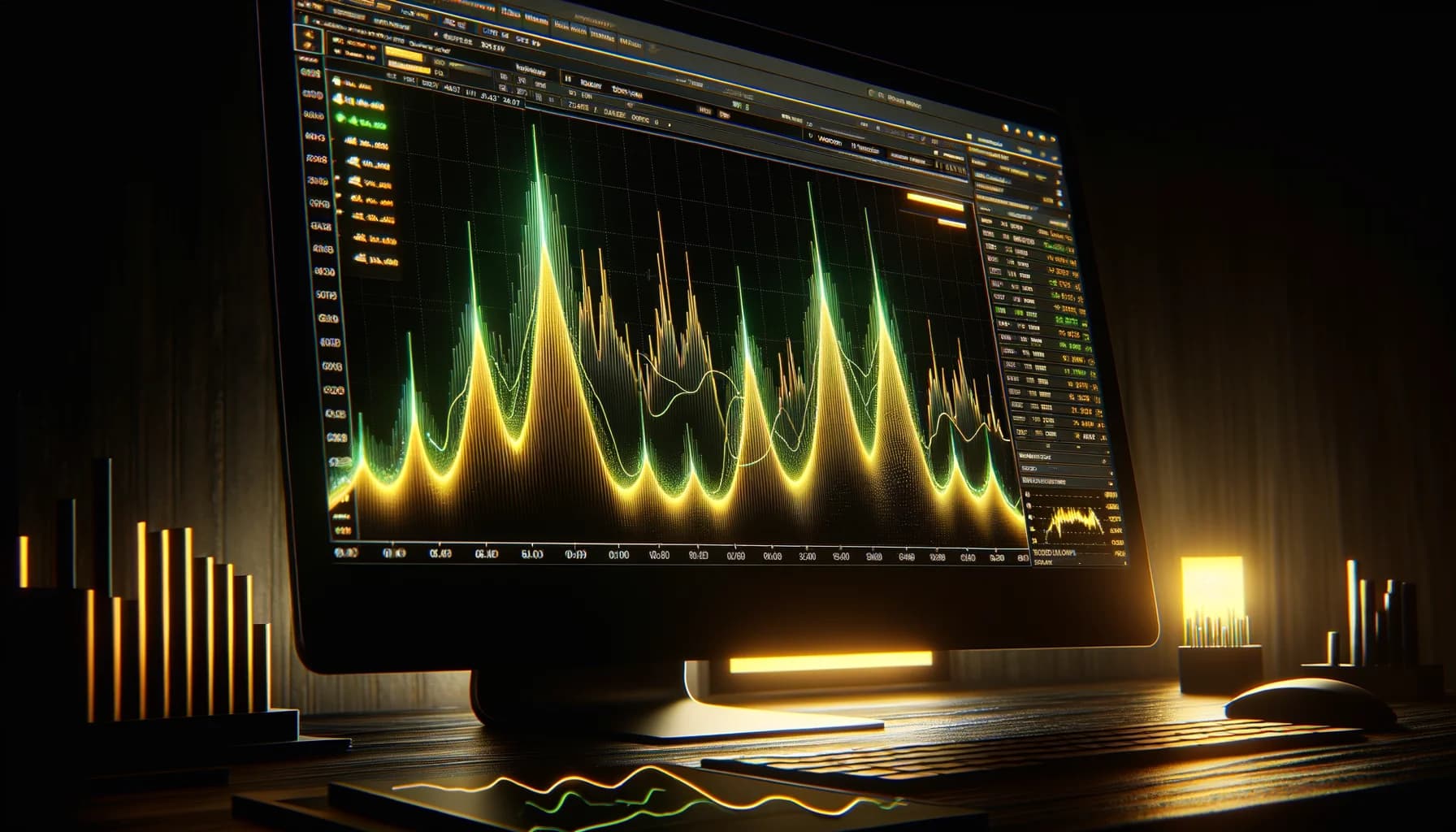
Unlike RSI or Stochastic that create smooth, rounded curves, the Fisher Transform produces sharp spikes and drops. When it changes direction, it does so dramatically. That's exactly what we want for timing entries and exits.

Most oscillators give you vague "overbought" regions. The Fisher Transform gives you specific moments when momentum shifts. It's the difference between someone pointing in a general direction versus laser-pointing at an exact spot.

The indicator plots two lines: the main Fisher Transform line and a signal line (which is just the previous period's value). When these lines cross, you get your trading signal.

What Is the Fisher Transform

John Ehlers developed the Fisher Transform to solve a specific problem: most price data isn't normally distributed. Prices tend to cluster around certain levels, creating skewed distributions that make traditional statistical analysis less reliable.

The Fisher Transform takes this messy price data and normalizes it into a bell curve distribution. This mathematical transformation makes extreme readings truly extreme — and more importantly, makes reversals from those extremes much sharper.

Think of it like adjusting a photograph's contrast. The Fisher Transform takes the subtle differences in price momentum and amplifies them into clear, distinct signals.

The indicator oscillates around a zero line. Positive values suggest upward momentum, negative values suggest downward momentum. But the real magic happens at the extremes and crossovers.

đź’ˇ Nice to Know: Ehlers borrowed the Fisher Transform from statistics, where it's used to stabilize variance in data sets. In trading, this stabilization creates more reliable signals by reducing the noise that plagues other oscillators.

FTMO.com - Für seriöse Trader

How the Fisher Transform Is Calculated

The Fisher Transform uses a two-step process: first it normalizes price data, then it applies the mathematical Fisher transformation.

Step 1: Normalize the price The indicator takes the highest high and lowest low over your chosen lookback period (typically 10), then calculates where the current price sits within that range. This creates a value between -1 and +1.

Step 2: Apply the Fisher Transform The normalized value gets plugged into the Fisher Transform formula: 0.5 Ă— ln[(1+x)/(1-x)], where x is your normalized price.

This logarithmic transformation is what creates those sharp turning points. As the normalized price approaches the extremes (+1 or -1), the Fisher Transform value accelerates toward infinity — creating the dramatic spikes we see on the chart.

The signal line is simply the Fisher Transform value from the previous period, creating the second line used for crossover signals.

🎯 Pro Tip: You don't need to calculate this manually — every platform does it automatically. But understanding the math helps you realize why the Fisher Transform reacts so dramatically to price extremes compared to other oscillators.

Reading Fisher Transform Signals

The Fisher Transform generates signals through three main methods: crossovers, extreme readings, and divergences.

Zero line crossovers provide the most basic signals. When the Fisher Transform crosses above zero, it suggests upward momentum. When it crosses below zero, downward momentum takes over.

Extreme readings occur when the Fisher Transform reaches levels above +2.0 or below -2.0. These represent significant momentum extremes that often precede reversals — but timing matters.

Signal line crossovers happen when the Fisher Transform crosses above or below its signal line (the previous period's value). This creates faster signals than zero line crossovers.

The key difference from other oscillators: the Fisher Transform doesn't stay in extreme territory for long. When RSI hits 80, it might hover there for days. When the Fisher Transform hits +2.0, it typically reverses quickly.

⚠️ Watch Out: Sharp doesn't always mean accurate. The Fisher Transform's sensitivity creates clean-looking signals, but many of these will be false in strong trending markets.

FTMO.com - Für seriöse Trader

Fisher Transform Crossovers

Signal line crossovers generate the most frequent Fisher Transform signals. When the main line crosses above the signal line, you get a bullish signal. When it crosses below, you get a bearish signal.

These crossovers work best when they occur from extreme levels. A bullish crossover from below -1.5 carries much more weight than one occurring near zero.

Zero line crossovers provide longer-term directional bias. A cross above zero suggests the overall momentum has shifted bullish, while a cross below zero indicates bearish momentum.

For day trading, focus on signal line crossovers. For swing trading, zero line crossovers provide better trend alignment. The timeframe you trade determines which crossover method works best.

Combine crossover direction with the level where it occurs. Crossovers from extreme readings (+1.5 or higher, -1.5 or lower) tend to produce more reliable signals than those occurring near the zero line.

🎯 Pro Tip: Fisher Transform creates much sharper turning points than RSI — it's designed to identify exact reversal moments rather than general overbought/oversold conditions.

Fisher Transform for Turning Points

The Fisher Transform excels at pinpointing exact reversal moments. While other oscillators give broad reversal zones, the Fisher Transform attempts to nail down the specific bar where momentum shifts.

Extreme readings followed by crossovers create the highest-probability turning point signals. Look for the Fisher Transform to reach +1.5 or higher, then cross back below its signal line. This combination suggests both momentum exhaustion and directional change.

Divergences between price and the Fisher Transform often precede major turning points. If price makes a new high but the Fisher Transform makes a lower high, downside reversal pressure is building.

The sharp mathematical properties of the Fisher Transform make these turning points more defined than typical oscillator signals. When it turns, it tends to turn decisively.

However, "sharp" doesn't guarantee "right." Strong trends can create multiple false turning point signals as the Fisher Transform repeatedly hits extremes without meaningful price reversals occurring.

đź’ˇ Nice to Know: The Fisher Transform's creator, John Ehlers, specifically designed it to solve the "rounded top" problem that affects most oscillators. Traditional indicators show gradual curves; the Fisher Transform shows distinct peaks and valleys.

FTMO.com - Für seriöse Trader

Fisher Transform vs RSI vs Stochastic

The Fisher Transform differs fundamentally from RSI and Stochastic Oscillator in both calculation and signal generation.

RSI measures the ratio of up moves to down moves over a set period. It creates smooth, flowing lines that can remain in extreme territory for extended periods. RSI above 70 might persist for weeks in a strong uptrend.

Stochastic compares closing prices to the high-low range over a lookback period. Like RSI, it creates relatively smooth oscillations and can remain overbought or oversold for considerable time.

Fisher Transform normalizes price data then applies mathematical transformation to create sharp reversals. It rarely stays at extreme levels, making it more responsive to momentum shifts.

The Stochastic RSI combines both RSI and Stochastic concepts, creating even more sensitive signals than either parent indicator alone.

For trending markets, RSI and Stochastic provide better trend-following signals. For range-bound markets or precise timing, the Fisher Transform's sharp reversals offer advantages.

The Fisher Transform generates more signals than RSI but fewer than fast Stochastic. Its mathematical properties create a middle ground between responsiveness and reliability.

⚠️ Watch Out: The Fisher Transform can produce many false signals in trending markets — it's best for range-bound conditions where its sharp reversals align with actual price reversals.

Best Fisher Transform Settings

The default 10-period setting works well for most timeframes and markets. This lookback period provides enough data for meaningful calculations without excessive lag.

Faster settings (5-9 periods) increase signal frequency and responsiveness. Use these on lower timeframes (5-minute, 15-minute charts) where you need quicker signals. The trade-off is more false signals and increased noise.

Slower settings (15-20 periods) smooth the Fisher Transform and reduce signal frequency. These work better on daily charts or when you want to filter out minor market noise.

Very fast settings (3-5 periods) turn the Fisher Transform into a hyperactive signal generator. Avoid these unless you're scalping with other confirmation indicators.

The key is matching the setting to your timeframe and trading style. Day traders might use 8-period settings on 15-minute charts. Swing traders might use 14-period settings on daily charts.

🎯 Pro Tip: Use Fisher Transform on higher timeframes for better signal quality — it produces too many signals on 1-minute charts where market noise dominates the mathematical precision.

FTMO.com - Für seriöse Trader

Combining Fisher Transform with Trend Filters

The Fisher Transform works best when combined with trend-filtering tools. Its sharp reversal signals can be misleading in strong trending markets.

Moving averages provide simple trend filters. Only take bullish Fisher Transform signals when price is above a 20 or 50-period moving average. Only take bearish signals when price is below.

Trend indicators like MACD or ADX help identify when trends are strong enough to ignore Fisher Transform reversal signals. When ADX is above 25, be cautious about counter-trend Fisher signals.

Support and resistance levels add context to Fisher Transform signals. A bullish Fisher signal at a key support level carries more weight than one occurring in the middle of nowhere.

The WaveTrend Oscillator offers similar turning point detection with different mathematical properties, making it useful for confirmation or alternative analysis.

Multiple timeframe analysis improves Fisher Transform reliability. If the 15-minute Fisher Transform shows a bullish signal, check that the hourly chart isn't in a strong downtrend.

🎯 Pro Tip: Combine with a moving average as trend filter to avoid taking counter-trend Fisher signals that fight the overall market direction.

Common Fisher Transform Mistakes

Chasing every signal is the biggest Fisher Transform mistake. Its sharp reversals look compelling, but many are false starts that quickly reverse again.

Ignoring the trend context leads to taking counter-trend signals in strong markets. The Fisher Transform will show multiple "reversal" signals during trends that never materialize into meaningful moves.

Using too-fast settings creates signal overload. A 3-period Fisher Transform on a 5-minute chart generates so many signals they become meaningless.

Expecting perfection from the mathematical precision. The sharp turning points look scientific and precise, but markets don't always cooperate with mathematical models.

Trading without confirmation means acting on Fisher Transform signals in isolation. The indicator works better when combined with price action, support/resistance, or trend analysis.

Wrong timeframe application occurs when day traders use Fisher Transform settings optimized for swing trading, or vice versa. Match your settings to your timeframe and holding period.

⚠️ Watch Out: The sharp turning points can be deceptive — a strong trend will create multiple false reversal signals that look convincing on the indicator but don't translate to actual price reversals.

FTMO.com - Für seriöse Trader

Key Takeaways

The Fisher Transform converts messy price data into sharp, defined turning points through mathematical normalization. This creates more precise signals than traditional oscillators like RSI or Stochastic.

Signal line crossovers from extreme levels (above +1.5 or below -1.5) provide the highest-probability trades. These combine momentum exhaustion with directional change confirmation.

Trend context matters enormously. The Fisher Transform's reversal signals work best in range-bound markets and poorly in strong trending conditions. Always filter signals through trend analysis.

Default settings work well for most applications. The 10-period lookback provides good balance between responsiveness and reliability across multiple timeframes.

The indicator's mathematical precision creates compelling-looking signals, but markets don't always respect mathematical models. Use the Fisher Transform as one tool in a broader analytical framework, not as a standalone trading system.

⚠️ Watch Out: Fisher Transform is sensitive to the lookback period — small changes produce very different results, so test any setting adjustments thoroughly before trading with them.

FAQ

What period should I use for the Fisher Transform?

The default 10-period works for most situations. Use 5-9 for faster signals on lower timeframes, 15-20 for smoother signals on daily charts.

How is Fisher Transform different from RSI?

Fisher Transform creates sharp, dramatic turning points while RSI creates smooth curves. Fisher Transform rarely stays at extremes; RSI can remain overbought/oversold for extended periods.

Can I use Fisher Transform for scalping?

Yes, but use higher timeframes (5-minute minimum) and combine with trend filters. The 1-minute timeframe produces too much noise for reliable Fisher Transform signals.

What are the best Fisher Transform extreme levels?

Readings above +1.5 or below -1.5 indicate momentum extremes. Readings above +2.0 or below -2.0 represent significant extremes that often precede reversals.

Should I trade every Fisher Transform crossover?

No. Focus on crossovers from extreme levels and align them with trend direction. Counter-trend crossovers in strong markets frequently fail.


Next Read: Master the WaveTrend Oscillator for another approach to precise turning point detection with smoother signal generation than Fisher Transform.

Was this helpful?

Continue Learning

Fisher Transform — Sharp Turning Point Detection | indicator.trading