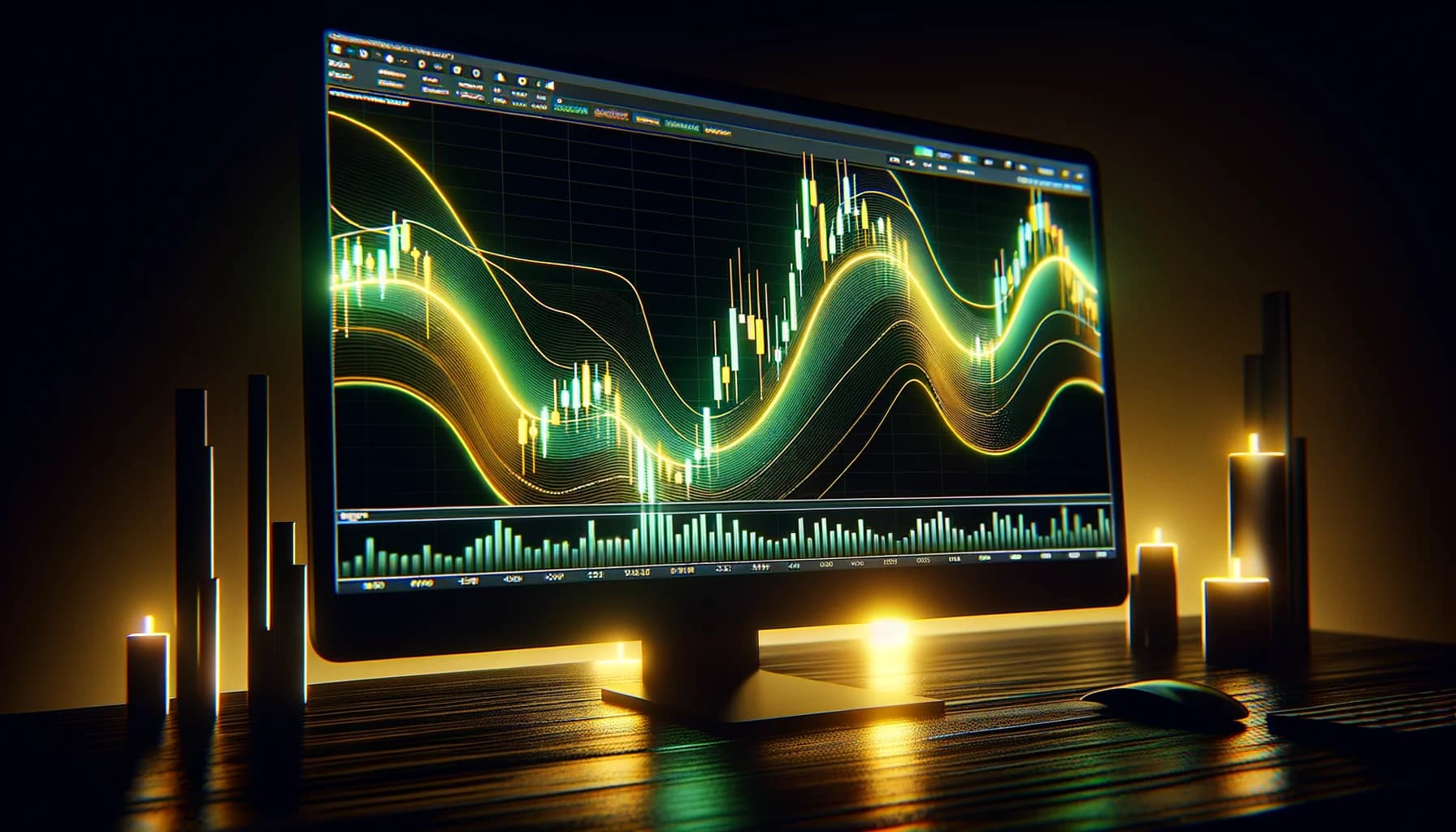
Keltner Channels wrap around price action like a snake around a branch, expanding and contracting based on market volatility. Unlike their famous cousin Bollinger Bands, Keltner Channels use the Average True Range (ATR) instead of standard deviation to measure volatility. This gives you smoother bands that don't spazz out during every little price hiccup.
Chester Keltner first described these channels in his 1960 book, but the modern version we use today got a makeover from Linda Bradford Raschke in the 1980s. She swapped out simple moving averages for exponential ones and added ATR calculations, creating a more responsive volatility tool.
Think of Keltner Channels as the practical cousin in the volatility family. While Bollinger Bands can get jittery, Keltner Channels keep their cool and give you cleaner signals for breakouts, mean reversion, and trend following.